

Submitted by David Kelley (he/him),
Friends of Wisdom Prairie Volunteer
“Don’t you imagine the leaves dream now
how comfortable it will be to touch
the earth instead of the
nothingness of the air and the endless
freshets of wind?”
– Mary Oliver, Song for Autumn
It’s early spring. Warm air, sunshine and rainfall abound. High in the canopy, tree buds have been waiting all winter for this. They burst open in all manner of green as trees awaken from a long winter’s slumber. As temperatures continue to rise, the leaves spread out as summer sun pumps life into the forest. Like millions of tiny solar panels, the leaves gather the sun’s light to power the tree’s growth.
To do this, trees use a process called, photosynthesis. Photosynthesis is the basis for many food webs including trees, plants and the plant-eating animals that depend on them.
The chemistry of photosynthesis looks complicated:
H2O + CO2 = C6H12O6 + O2
But photosynthesis is simple. Using the sunlight, photosynthesis combines water and carbon to produce energy and oxygen.
During photosynthesis leaves gather sunlight through tiny pores, called stomata, while tree roots absorb water and other nutrients from the soil. The tree pulls water up the trunk to the leaves, where photosynthesis occurs. The energy produced is returned to the roots in the form of sugars, or food, which fuel tree growth. Growth includes the addition of new plant tissue and the creation of new wood as trees grow taller and wider.
Photosynthesis is an essential to most life on Earth. It allows trees, and most plants, to capture carbon from the atmosphere and lock it away. It also produces oxygen, a critical element of our atmosphere.
For many trees at Holy Wisdom, photosynthesis occurs only in warmer months, when sunlight is plentiful and temperatures are warm. For other trees – conifers or evergreens – it’s a year round process, which occurs in their unique leaves, or needles.
Why are leaves green? In warmer months, trees’ leaves are filled with a pigment, chlorophyl, which absorbs red and blue light. Chlorophyl also reflects green light, giving leaves their color. Chlorophyl is also a key part of photosynthesis.
As summer fades to fall, shorter days and cooler temperatures trigger changes within the tree. Leaves begin to take on a lighter shade of green, hinting of more changes to come. Eventually many trees will lose their leaves and enter a period of dormancy where photosynthesis pauses as trees sleep through winter. But before that happens something amazing occurs, something that gets so many of us outside in autumn, cameras in hand.
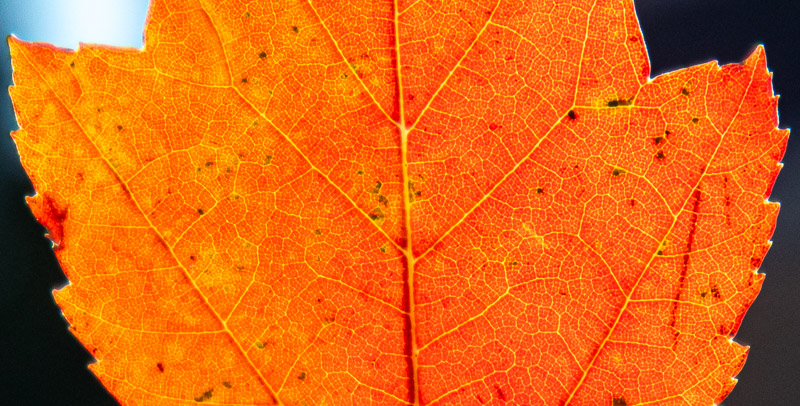
Before dropping their leaves, trees stop producing chlorophyll. As this pigment fades, other pigments – yellow, red, orange – reveal themselves. And it’s quite a show. Seemingly overnight the forest explodes in color, like fireworks popping in the sky. This is the dazzling display we call fall colors. For a short while, trees are a color mosaic, a cornucopia for the eyes. They draw us into the forest to marvel at nature’s annual spectacle.
The woodlands and savannas of Holy Wisdom are home to several types of tree. Each plays a part in this autumn show. Here one finds various oaks and maples as well as elm, walnut, hickory, willow and others, each with its own color scheme. It’s a fantastic time to be at Holy Wisdom!
Sadly, all good things must end.
All too quickly, trees’ hormonal processes cause the leaves break their summer holds. They dance briefly in the autumn breeze before floating and spiraling to the ground. The branches become bare, as the forest lays down a carpet of colors and shapes. As one strolls the forest trails, each step produces crunches and crackles as the leaves dry out.
Over time the colors fade and leaves decompose, returning nutrients to the soil. These become part of the spring food supply used by trees and plants when they awaken from their winter slumber.
Soon the forest will lie blanketed in white. The migrating birds will be long gone and cold and dark spread across on the forest. The trees will sleep their winter sleep, dreaming of long days and warm breezes to come, when the cycle begins again.
Comments 2
Dave, thank you for writing so beautifully about the fascinating story of trees and their fall colors. Your leaf photos are great. Once you start noticing the endless variations, it’s hard to pick any one leaf that is more amazing than an other.
Dave, your article was excellent and your photos exquisite. With appreciation for sharing your amazing information!